Stem Cell Therapy for Tendon and Ligament Injuries

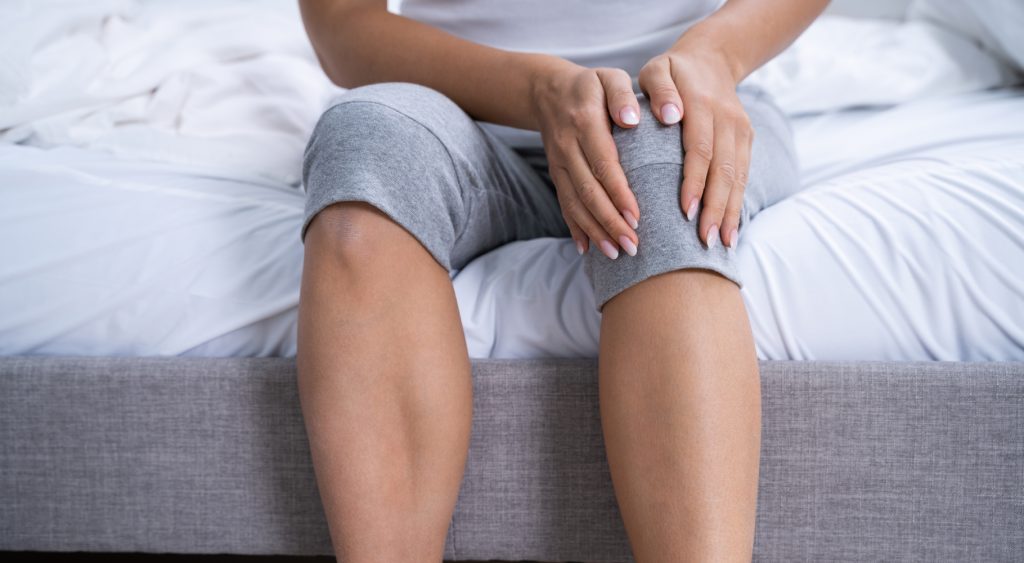
Tendon and ligament injuries have a way of humbling even the most disciplined patients. A runner who shrugs off sore quads may be stopped cold by Achilles pain that lingers for months. A tennis player can compensate for a frayed elbow tendon for a season, then suddenly struggle to lift a coffee mug. A skier with a partial medial collateral ligament injury may feel almost normal walking around town, yet remain nowhere near ready to cut, pivot, or absorb force at speed. These are not dramatic, headline-grabbing injuries in every case, but they are stubborn, often slow to heal, and deeply disruptive.
That frustration is one reason Stem Cell Therapy has attracted so much attention in sports medicine, orthopedics, and regenerative care. Patients hear the phrase and understandably hope for a shortcut, a way to heal tissue that has stopped responding to rest, physical therapy, anti-inflammatory medication, or time. The reality is more nuanced. Stem Cell Therapy is neither miracle nor gimmick by default. Its value depends on the diagnosis, the severity and chronicity of the injury, the type of biologic used, the quality of rehab afterward, and perhaps most importantly, the expectations brought into the process.
For tendon and ligament injuries, the key question is not simply whether stem cells can help. It is whether a regenerative approach can improve the tissue environment enough to support a stronger, more durable repair than standard conservative care alone. That distinction matters because tendons and ligaments heal differently from muscle. They have relatively limited blood supply. Their collagen architecture is highly organized. When they are injured, especially in chronic overuse conditions, the problem is often not just inflammation. It can involve degeneration, disordered collagen fibers, poor mechanical loading patterns, and failed healing over time.
Why these injuries are so difficult to treat
A torn hamstring may produce dramatic bruising, but muscle generally has a better healing capacity than a worn patellar tendon or a chronically thickened Achilles tendon. Ligaments sit in a similarly frustrating category. Some heal reasonably well with bracing and progressive loading, while others heal with laxity, scar tissue, or persistent weakness.
In clinical practice, tendon injuries often fall into two broad groups. The first is acute injury, such as a partial tear from a sudden overload. The second is chronic tendinopathy, where tissue quality has deteriorated over time from repetitive stress, poor biomechanics, under-recovery, or age-related change. Ligament injuries also vary widely, from a mild ankle sprain to a partial ulnar collateral ligament tear in an overhead athlete, to a collateral ligament sprain in the knee that creates instability under load.
This variation matters because regenerative treatment is rarely one-size-fits-all. A fresh, sharply defined injury behaves differently from a degenerative lesion that has been symptomatic for a year. A 28-year-old soccer player with a localized proximal hamstring tendon tear is not the same case as a 62-year-old with diffuse rotator cuff tendinopathy, diabetes, and limited shoulder mobility. The biology, loading demands, and goals are completely different.
What Stem Cell Therapy actually means in this setting
The term gets used loosely, which creates confusion. In orthopedics and sports medicine, most so-called stem cell procedures involve autologous cells, meaning they come from the patient’s own body, commonly bone marrow aspirate concentrate or adipose-derived cellular preparations. These are not identical products, and they are not pure stem cell isolates in the way many patients imagine. They are mixtures of cells and signaling molecules intended to support healing, modulate inflammation, and influence the local repair environment.
That may sound like a technical distinction, but it has practical importance. Much of the hoped-for benefit likely comes not from cells turning directly into new tendon or ligament tissue in some simple, linear way, but from their signaling effects. They may help recruit local repair responses, alter the inflammatory balance, and support a more favorable healing cascade. In a chronically unhealthy tendon bed, that can be meaningful. It can also be insufficient if the mechanical problem remains unaddressed.
A procedure typically involves image guidance, often ultrasound and in some settings fluoroscopy, to place the injectate precisely into the injured structure or at the tendon-bone or ligament-bone interface. Precision matters. A poorly targeted injection into nearby soft tissue is not the same as delivering a biologic treatment to the actual lesion.
Where the promise is strongest
The best candidates tend to be patients with partial tears, chronic tendinopathy that has not improved with appropriate conservative care, or certain ligament injuries where structural continuity remains but healing is incomplete or poor quality. In those cases, there is enough native tissue present to potentially respond to biologic stimulation and progressive rehabilitation.
Common clinical scenarios where regenerative treatment enters the discussion include lateral epicondylitis, patellar tendinopathy, proximal hamstring tendinopathy, gluteal tendinopathy, Achilles tendinopathy, partial rotator cuff tendon tears, plantar fascia degeneration, and selected ligament injuries such as partial medial collateral ligament or ulnar collateral ligament tears. Some of these conditions have a better track record with orthobiologic approaches than others, and the evidence quality varies. That is an important point. Enthusiasm in practice has often moved faster than the science.
Even so, there are cases where experienced clinicians repeatedly see a pattern. A patient has done physical therapy seriously, not casually. They have corrected loading errors, addressed strength deficits, modified activity, and given the tissue adequate time. Pain improves somewhat but plateaus. Imaging still shows a focal degenerative or partially torn area. In that setting, Stem Cell Therapy may offer a reasonable next step before surgery, particularly for someone trying to preserve tissue rather than replace or debride it.
Where expectations often go wrong
The most common misunderstanding is that the injection itself does the whole job. It does not. Biologic procedures can create an opportunity for healing, but tendons and ligaments still need graded mechanical loading to remodel properly. If the patient returns too early to sprinting, jumping, throwing, or heavy lifting, the gains may unravel. If the patient avoids loading altogether out of fear, the tissue may not organize well either.
Another misconception is that every tendon problem is inflammatory. Many chronic tendon conditions are better described as degenerative rather than acutely inflamed. That is one reason repeated corticosteroid injections can be disappointing in the long run. Steroids may reduce pain temporarily, but they do not necessarily improve tissue quality and in some settings can weaken the structure if overused. Regenerative treatments appeal in part because they aim for a different biological effect, though again, that does not guarantee success.
The third major problem is poor diagnostic labeling. Patients are often told they have “tendonitis” or “a sprain” when the real picture is more specific. Is there a partial tear? Is there tendon sheath irritation but intact tendon fibers? Is the ligament scarred but stable? Is the pain source actually referred from the spine or hip? A biologic treatment is only as smart as the diagnosis guiding it.
The role of imaging and examination
A thorough history and physical exam remain central. Imaging should support the diagnosis, not replace clinical reasoning. Ultrasound can be especially useful for tendons and superficial ligaments because it shows fiber pattern, focal defects, neovascularity, thickening, and response to dynamic movement. MRI adds value for deeper structures and for assessing the full extent of injury, surrounding edema, and associated pathology.
In my experience, the most useful conversations happen when imaging findings and symptoms clearly line up. A patient points to a very specific area of pain, pain is reproduced with a corresponding load test, and imaging shows a focal lesion in that exact structure. Those are far cleaner decisions than the more common mixed picture where imaging shows several age-related changes and only one may actually matter.
That is not a small issue. Plenty of adults over 40 have asymptomatic tendon degeneration on scans. Treating a picture instead of a patient is one of the easiest ways to overpromise and underdeliver.
Who tends to be a good candidate
The best candidates usually share several features. They have a clearly defined tendon or ligament problem, symptoms lasting long enough to establish failed conservative care, imaging that supports a treatable lesion, and a willingness to follow a structured rehab plan afterward. They also understand that pain relief may be gradual rather than immediate.
A patient who often does well is the active adult with a partial tendon tear or chronic focal tendinopathy who wants to avoid surgery but has already put in the work with physical therapy. A less ideal candidate is someone hoping to skip rehab entirely, someone with a complete rupture requiring surgical repair, or someone with widespread pain not clearly attributable to a single structure.
Here are a few practical questions worth asking before pursuing treatment:
- Has the diagnosis been confirmed with a careful exam and appropriate imaging?
- Have conservative measures been done well, for long enough, and with proper progression?
- Is the injury partial or degenerative, rather than a complete rupture that likely needs surgery?
- Will the procedure be performed with image guidance by someone who treats these injuries regularly?
- Is there a detailed rehabilitation plan for the next eight to sixteen weeks?
If a clinic cannot answer those questions clearly, caution is warranted.
What the procedure day usually looks like
Most patients are surprised by how procedural, rather than dramatic, the day feels. For bone marrow-derived treatment, marrow is often aspirated from the pelvis. The material is then processed and prepared for injection. Adipose-derived approaches involve a different harvest method and have their own logistical and regulatory considerations depending on the setting. The final product is then placed into the injured area under imaging guidance.
Some soreness afterward is normal, and in many cases it is expected. Patients should not interpret early post-procedure pain as failure. In fact, the first couple of weeks can be deceptively discouraging because the tissue may feel irritated before any improvement becomes obvious. That is where good pre-procedure counseling matters. People cope better when they know the early timeline is often uneven.
The immediate aftercare varies by structure and protocol. A high-demand tendon like the Achilles or patellar tendon may need a carefully protected loading phase. A collateral ligament may require bracing for a period. Return-to-sport timelines differ widely based on the tissue, injury grade, sport demands, and how the patient responds.
Rehabilitation is where outcomes are won or lost
It is hard to overstate this. The injection is an event. Recovery is a process.
For tendons and ligaments, graded loading is the bridge between biologic stimulation and functional healing. That means pain-calibrated isometrics early in some cases, then progressive isotonic work, then energy storage, then elastic and sport-specific loading where appropriate. A thrower with a healing elbow ligament does not follow the same arc as a middle-aged patient with gluteal tendinopathy, but both need a progression that respects tissue biology and mechanical demand.
A sensible rehab plan usually emphasizes these principles:
- Protect the treated tissue early, but do not immobilize longer than necessary.
- Reintroduce load progressively, matching intensity to healing stage and symptoms.
- Rebuild kinetic chain strength, since weak hips, trunk, calf, or scapular control often overload the injured structure.
- Use objective milestones, such as strength symmetry or tolerance to specific drills, not just pain at rest.
- Delay full return to sport until the tissue handles speed, force, and repetition, not just basic daily activity.
Patients sometimes ask when they will “know” it worked. The honest answer is that improvement often appears as a trend rather than a single moment. A tendon that previously flared the morning after every workout may start settling faster. Stiffness may shorten from an hour to fifteen minutes. Strength may return before confidence does. These details matter more than chasing a dramatic overnight change.
How evidence should be interpreted
The evidence base for Stem Cell Therapy in tendon and ligament injuries is promising in some areas, limited in others, and still evolving overall. That may sound cautious, but it is the responsible stance. Some studies show encouraging improvements in pain and function for selected conditions, while others are difficult to compare because protocols differ. Cell source, processing method, injury type, injection technique, outcome measures, and rehab design can all vary. When those variables shift, results become hard to generalize.
This is one reason blanket statements are unhelpful. Saying “stem cells work” is too broad to be meaningful. Saying “they never work” is equally simplistic. A better question is whether a specific biologic approach, delivered in a specific way, to a specific injury pattern, improves outcomes beyond standard care or other injectables.
The strongest clinical judgment sits somewhere between hype and dismissal. There are real patients who seem to benefit, particularly in carefully selected cases. There are also real patients who spend a significant amount of money and feel little change. Both truths can exist at once.
Risks, limitations, and the less glamorous realities
Autologous procedures are generally considered relatively low risk when done properly, but low risk is not no risk. Infection, bleeding, increased pain, incomplete response, and failure to avoid surgery remain possible. Harvest site soreness, especially with bone marrow aspiration, can be more uncomfortable than patients expect for a few days.
The bigger limitation is uncertainty. Unlike a standard ACL reconstruction with a well-characterized rehab arc, regenerative procedures can be less predictable. Some patients improve steadily over three to six months. Others plateau. A few worsen temporarily before eventually improving. Cost is another real issue, since many of these treatments are not covered by insurance.
There is also the matter of clinic quality. The regenerative medicine space includes excellent practitioners and aggressive marketers, sometimes in the same city. If the sales pitch sounds smoother than the clinical explanation, that should give anyone pause. A credible practice should discuss alternatives, not just procedures. It should explain why the treatment fits this injury, not simply why regenerative care is exciting in general.
When surgery still makes more sense
A complete tendon rupture is a different conversation. So is a complete high-grade ligament tear that leaves the joint mechanically unstable. In those cases, Stem Cell Therapy may have an adjunct role in some settings, but it is not a substitute for restoring continuity or stability when surgery is clearly indicated.
There is also the patient with long-standing failed tendon disease and substantial structural breakdown. Sometimes the tissue quality is simply too poor, or the mechanical environment too compromised, for an injection-based strategy to offer enough. Surgery is not a defeat in those cases. It is an appropriate tool.
The best specialists are usually comfortable saying no. If every patient is told they are an ideal candidate, that is not personalized care. That is product-based medicine.
What patients should watch for after treatment
Progress tends to be uneven, but it should move in the right direction over time. Morning pain, activity tolerance, post-exercise flare duration, force production, and confidence under load are often more useful than a single pain score. Follow-up imaging can sometimes help, though it should be interpreted carefully. Structural change on ultrasound or MRI may lag behind symptom improvement, and imaging is only part of the story.
A common pattern in tendon rehab is this: pain decreases modestly first, function improves next, and sport-specific confidence returns last. Patients often get impatient in that final phase because ordinary life feels manageable, yet the tissue is not ready for maximal demands. That is when re-injury risk climbs.
A measured view of the field
Stem Cell Therapy for tendon and ligament injuries sits in a space that attracts both sincere hope and inflated claims. The hope is understandable. These injuries are notorious for dragging on, and standard treatments do not always restore the level of function that active people want. The inflated claims are also predictable, because regenerative medicine sounds futuristic and commercially attractive.
The mature view is https://soundcloud.com/denverregenerativemed less dramatic and more useful. Biologic treatment may improve the healing environment in carefully selected tendon and ligament injuries, especially partial tears and chronic degenerative cases that have resisted well-executed conservative care. It is not magic tissue glue. It does not replace diagnosis, biomechanics, or rehabilitation. It may help some patients avoid surgery, but it does not erase the need for surgery when the structural problem is too severe.
For patients and clinicians alike, the most productive mindset is to treat Stem Cell Therapy as one tool within a broader strategy. The strategy starts with an accurate diagnosis. It continues with sound loading principles, realistic timelines, and honest monitoring of progress. When those pieces line up, regenerative treatment can be a thoughtful option rather than a leap of faith.
That is usually where the best outcomes begin, not in a dramatic promise, but in a disciplined plan.
Denver Regenerative Medicine | Stem Cell Therapy, HRT, Testosterone Clinic
Address: 155 Boardwalk Dr Ste 400 - #451, Fort Collins, CO 80525
Phone number: +17205831648
FAQ About Stem Cell Therapy Fort Collins
What are the negative side effects of stem cell therapy?
Stem cell therapy can cause mild short-term reactions like injection-site pain, fatigue, and low-grade fever. More serious risks include infection, immune system rejection, blood clots, unintended tissue growth or tumors, and severe complications from unproven treatments at unregulated clinics.
What diseases can stem cells cure?
Currently, stem cells routinely and effectively cure specific blood cancers, immune deficiencies, and blood disorders using established bone marrow or cord blood transplants. Most other applications—such as for Parkinson's, diabetes, or heart failure—remain experimental or in clinical trials rather than proven cures.
Do stem cell treatments really work?
Yes, stem cell treatments work, but only for a very specific group of conditions. Hematopoietic stem cell transplants (bone marrow transplants) are fully proven and widely used to treat blood cancers like leukemia and lymphoma. However, commercial stem cell treatments for joint pain, arthritis, and wrinkles are largely unproven, experimental, and costly.